Termite Treatment Cost in Florida and Texas: Real Prices by Method
What termite treatment actually costs in Florida and Texas: real published prices by company and method, what drives the range, and what your contract must show before you pay.
Published · How we source this
Termite treatment isn’t sold by the square foot, so there’s no one price to expect. Published figures run from about $85 for an inspection up to $1,000 to $3,000 or more for a full liquid or bait job. How much your job costs within that range depends on how many feet of foundation get treated, how deep the footing goes, whether you’re on a slab or have a crawl space, and which species you have. Below are real prices companies in Florida and Texas publish on their own sites, by method, with the date we checked each one.
For an actual number, get quotes from termite companies in Tampa, Orlando, Houston or Dallas and ask what each price is based on. The section on contracts, further down, lists what Florida and Texas law require in writing before you pay.
What termite treatment actually costs, by company
Most listed termite companies in both states advertise free inspections and promotional discounts. Treatment prices themselves are harder to find, but a few companies publish real figures.
| Company (licence, metro) | Service | Published price | Date checked |
|---|---|---|---|
| Swat Exterminating Co. (FDACS JB155017, Clearwater/Tampa) | Termite inspection | $85 flat for homes up to 3,000 sq ft, plus $10 per extra 1,000 sq ft and $10 for a crawl space | 27 Sep 2026 |
| Tampa Bay Pest Management (FDACS JB176038, Land O Lakes) | WDO inspection | From $85, varying by size and structure | 27 Sep 2026 |
| Resolve Pest and Termite Control (Houston) | Termite inspection | “Starts at $175 + tax,” with a credit toward treatment if you book within 60 days. Includes the T-5 / NPMA-33 forms | 28 Sep 2026 |
| BUGCO Pest Control (San Antonio) | Residential treatment | “Usually sets you back about $1,000,” with warranty renewals “$100 or more after that” | 28 Sep 2026 |
| BUGCO Pest Control (San Antonio) | Termite Pledge (bond) | “Less than $100 of added costs a year” | 28 Sep 2026 |
| Hoffer Pest Solutions (South Florida) | Tent fumigation | $1.00 to $2.00 per sq ft, or $1,000 to $3,000 statewide. Its “urban Florida” band (Miami, Tampa, Orlando) runs $2,500 to $4,000 | 28 Sep 2026 |
Tenting has its own full guide with the timeline and prep checklist: see termite tenting in Florida.
We also checked companies directly in Dallas and San Antonio, then in Miami and Orlando. Every company we found there advertised a free inspection or a promotional discount. A treatment price on the company’s own site was the one thing missing everywhere. Where a company’s own price isn’t published, cost-comparison sites fill the gap with estimated ranges, covered next. Read those knowing they’re estimates rather than a specific company’s number.
What cost-comparison sites estimate
The figures below come from third-party pricing sites rather than the companies themselves. At least one source states outright that its per-metro numbers are copied from its national averages.
| Source | Liquid treatment | Bait install | Bait renewal | Bond renewal |
|---|---|---|---|---|
| pestcontrolpricing.com (Tampa page, updated 5 Mar 2026) | $300 to $900 per job | $800 to $1,500 (incl. year one) | $200 to $400/yr | $250 to $500/yr |
| Angi (Tampa page, updated 3 Oct 2025) | $3 to $16 per linear ft | not stated | not stated | not stated |
| termitetreatmentprice.com (Sentricon, Orlando figure) | not applicable | Orlando $1,000 to $1,800; Florida-wide $2,000 to $4,000 | Orlando $250 to $450/yr; Florida-wide $400 to $550/yr | not stated |
| termitetreatmentprice.com (Termite Bond page) | not applicable | not applicable | not applicable | $150 to $500/yr ($150-$300 retreatment-only; $300-$500 repair-and-retreat) |
pestcontrolpricing.com’s Tampa page says its figures are “estimated from national averages,” and its Tampa column matches its national column exactly. Angi’s Tampa page has a second, size-based table that implies $3,000 to $20,000 for a 1,000 sq ft house, well above the per-linear-foot figure printed above it. We’re reporting each source under its own name here rather than blending them into one pestlist number, since none of them explains where its figures come from.
What drives the price
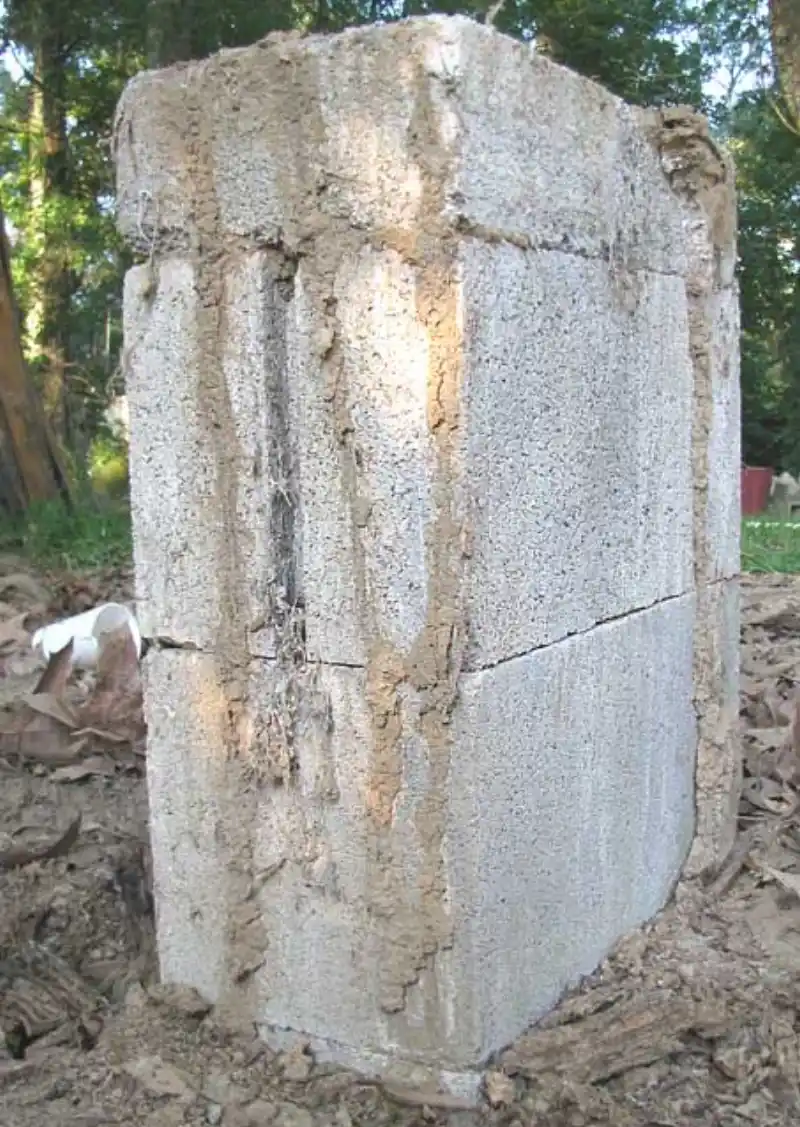
A liquid soil treatment is priced by the linear feet of foundation that need a chemical barrier and by how deep that barrier has to go. Texas fixes the actual application rate by law at 4 gallons of termiticide per 10 linear feet per foot of footing depth for the backfill next to foundations, piers and critical areas (Texas Department of Agriculture, pre-construction treatment guide, rev. 1-1-15). A company can’t legally drop below the label’s minimum concentration to bring the price down. A house with a deep footing or a long, irregular perimeter needs more product than a small rectangular slab at the same square footage. Two per-linear-foot quotes on similar-looking houses can land far apart for exactly this reason.
TDA doesn’t set prices. Its guide does warn about bids “only a fraction of the cost of the materials needed to do the job correctly,” and a bid that cheap usually means the crew plans to under-dose the job.
Foundation type changes the price too. A slab needs drilling through concrete to treat under it. A pier-and-beam house or one with a crawl space needs the crawl space treated directly, and Swat Exterminating adds a flat $10 to its inspection price for exactly that reason.
Most liquid and bait jobs are for subterranean termites; our subterranean termites guide explains how they get into a house.
Species changes it. The Vikane fumigant label sets the Formosan dose at four times the drywood dose. Liquid and bait jobs work on the same basic logic. A bigger, more aggressive colony needs more chemical or more bait than a smaller one, though no source in this research states a specific Formosan dollar premium for those two methods.
Warranty terms change the annual number. A bond that includes repair coverage up to a stated cap costs more per year than a bond that only covers re-treatment.
How the methods differ, apart from price, is in our treatment options guide.
Treatment methods and what they’re priced by
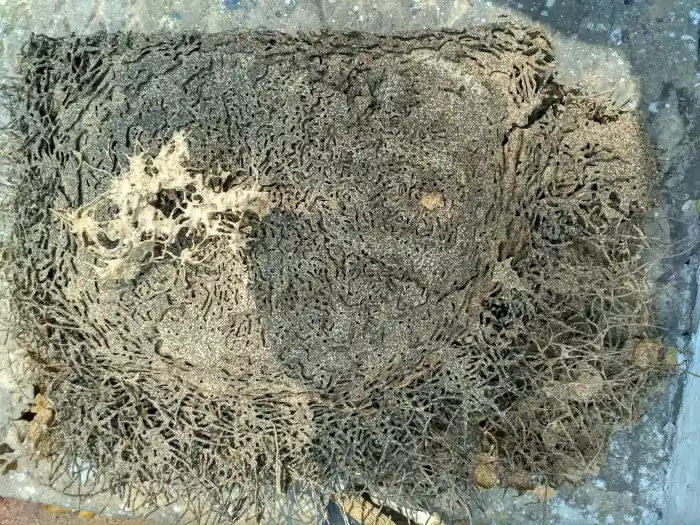
Liquid soil treatment runs by the linear foot of perimeter, at the label’s gallons-per-foot rate, and it targets subterranean termites entering from the soil. A bait system runs by the number of stations installed plus an annual monitoring fee, and it’s an alternative to a full liquid barrier for the same subterranean species. Spot treatment is priced per job rather than per foot, because it targets one reachable gallery, usually a drywood infestation in one piece of wood. Tenting runs on the cubic volume of the structure and the fumigant dose rather than floor area. Our tenting cost guide has that full breakdown.
A useful quote states the method and shows the footage or station count behind the number. It spells out the warranty terms too, so you have something to weigh against a second quote. A bare dollar figure with nothing behind it doesn’t give you much to compare.
Before you sign
Ask what the renewal costs after year one and whether it covers repairs or only re-treatment. Our termite bond guide explains the difference.
In Florida, you get the written contract before any work starts and before you pay anything. Its first page has to say whether it covers subterranean termites, drywood termites, or both, and it has to name Formosan or any other species the contract excludes. The maximum treatment price appears on its own line. So does the exact annual renewal fee, and so does the maximum repair price (Fla. Admin. Code r. 5E-14.105(2)).
In Texas, warranty and guarantee details have to appear in the disclosure documents the company gives you before treatment (4 TAC 7.174(b)(5)). Ask for the treatment method, the linear footage or number of stations the price is based on, and what happens if the treatment doesn’t hold.
Get quotes
Compare termite companies in Tampa, Orlando, Miami, Jacksonville, Fort Myers or West Palm Beach in Florida, or Houston, Dallas and San Antonio in Texas. Ask each company for the method behind its number and the footage or stations it covers. Get the warranty terms in writing too.
Common questions
Why did two companies quote me such different prices for what sounds like the same job? Ask what footage or how many stations each price covers. A lower bid on the same house can mean less product than the label requires, a possibility the Texas builder guide calls out directly (TDA).
Is bait cheaper than liquid treatment? It depends on the year you’re counting. Bait skips the drilling and trenching up front, but it adds an ongoing annual monitoring fee that a liquid barrier doesn’t have. Compare the first-year price and the renewal price separately.
Does a termite inspection cost extra if I already have a WDO report? A WDO report and a termite inspection can be the same visit at some Florida companies. Tampa Bay Pest Management prices them together, from $85. Other companies treat them as separate services, so ask which one you’re being quoted.
What should the contract show before I pay a deposit? In Florida, the maximum treatment price, the annual renewal fee, and the maximum repair price each get their own line (Fla. Admin. Code r. 5E-14.105(2)(i)). In Texas, the treatment method and warranty terms belong in the disclosure documents (4 TAC 7.174(b)(5)).