Flying Termites: How to Tell Them from Ants and What They Mean
Winged insects at a light or on a windowsill in Florida or Texas? How to tell flying termites from flying ants, which species you're seeing, and what to do next.
Published · How we source this
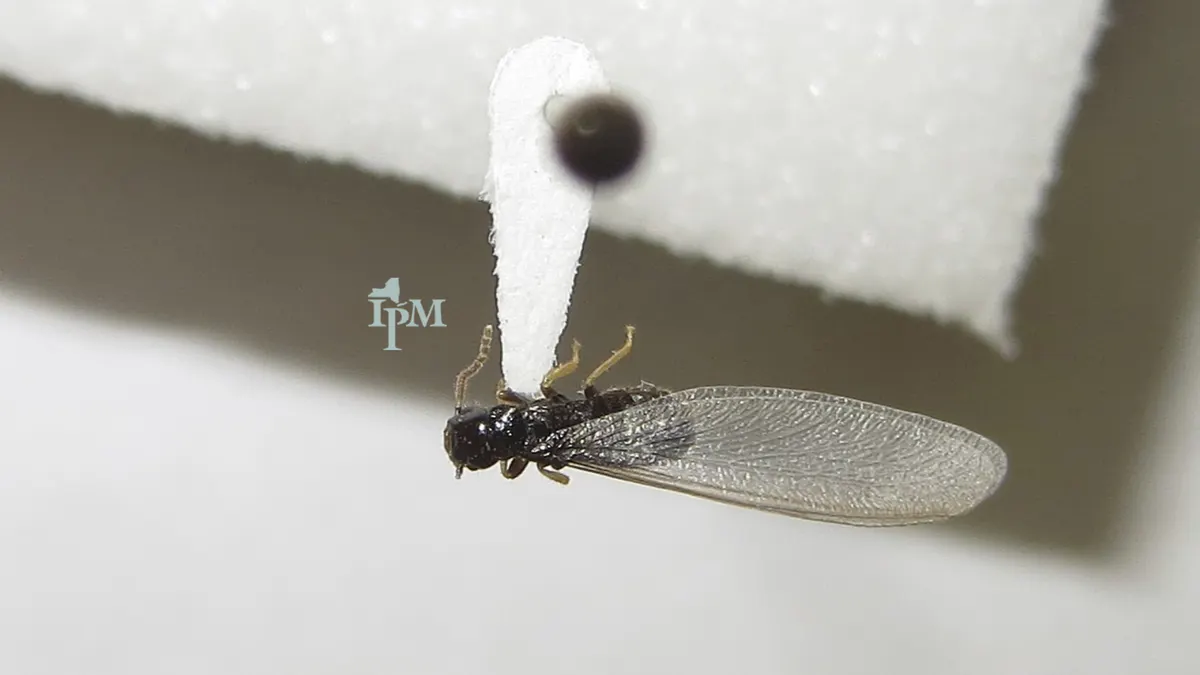
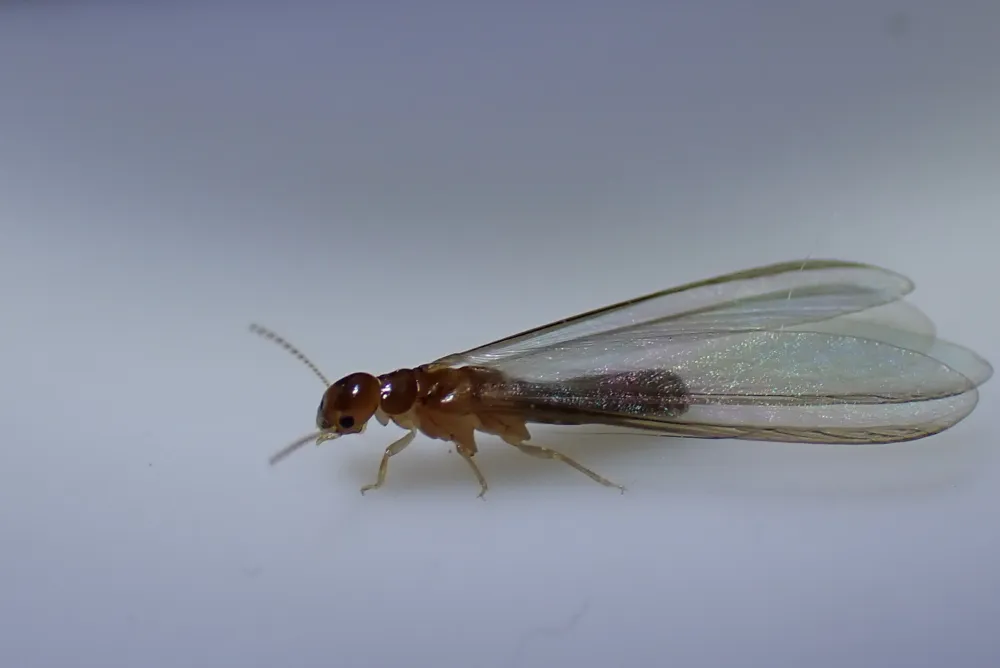
Flying termites are winged, reproductive termites, called alates or swarmers, that leave a mature colony to start new ones. If you’re seeing winged insects at a light, crawling on a windowsill, or scattered as loose wings on the floor, the fastest way to know if they’re termites is to check the wings, the waist and the antennae. Termites have two pairs of wings the same length. Flying ants have one long pair and one short pair.
Book an inspection either way if you’re unsure: compare termite companies in Tampa, Houston or the other metros below.
Termite or flying ant?
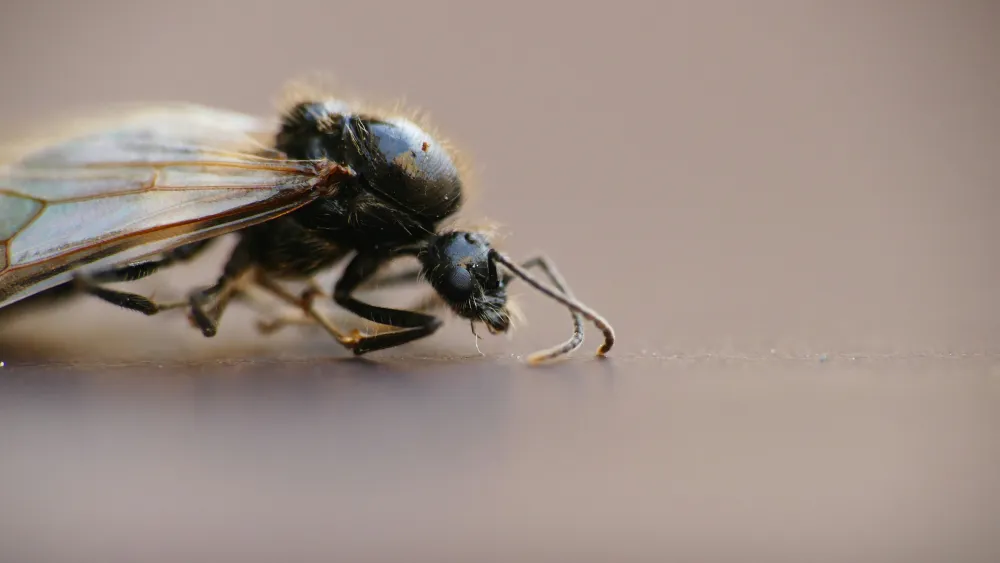
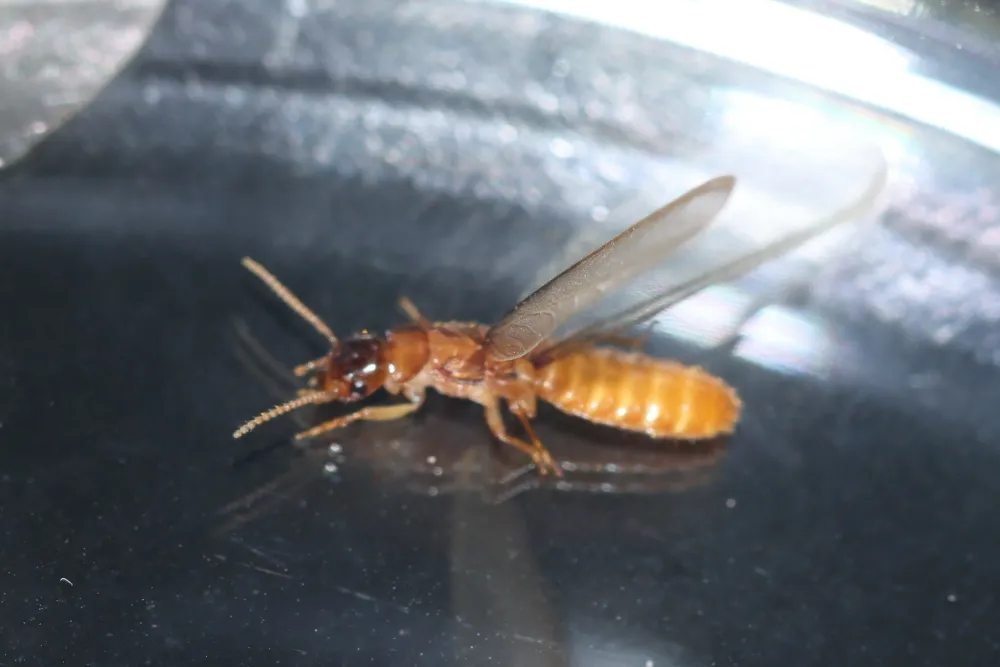
Texas A&M’s guide to telling the two apart is exact on all three points (ENT-2012):
| Termite | Flying ant | |
|---|---|---|
| Wings | “Long, equal-length wings,” both pairs the same size | “Four wings … unequal in length (two long and two relatively short)” |
| Waist | “Dark, straight sided bodies,” thick, no pinch | “Distinctly pinched waists (the joint between thorax and abdomen)” |
| Antennae | “Flexible throughout their length,” straight or beaded | “Bend sharply in the middle,” elbowed |
If you have a specimen or a clear photo, check the wings first: that one feature settles most cases at a glance. ENT-2012 also warns that “many suspected termite infestations turn out, on close inspection, to be some other insect,” so save one if you can (rubbing alcohol in a crush-proof container, with the date and the room noted).
Which termite, and when it swarms
Time of day and season narrow things down before you get anywhere near a species name. Florida and Texas have four termites a homeowner is likely to see swarming, and each keeps to its own window.
| Species | When it flies | Where |
|---|---|---|
| Native (eastern) subterranean, Reticulitermes spp. | Daylight, usually early afternoon, on warm, often post-rain days. Texas: March to April, January to February in South Texas. Florida: R. flavipes January to April, R. virginicus February to late May | Statewide in both states |
| Formosan subterranean, Coptotermes formosanus | After dark, drawn to lights. Houston area: early May into June, clustering around Mother’s Day. Florida: early April to late June, peak May | Established around Houston and along the upper Texas coast; established across much of coastal and urban Florida |
| Asian subterranean, Coptotermes gestroi | Dusk, starting early March, with flights reported into late May in some years | South Florida only, confirmed established in the Tampa area as of March 2023 |
| Cryptotermes brevis, drywood | Night, dusk to dawn, mainly April to June, though flights are possible any time of year | Florida, especially south and coastal areas |
Native subterranean termite timing comes from Texas A&M E-368 and UF/IFAS EENY-212/IN369. Formosan timing comes from Texas A&M E-367 and UF/IFAS EENY-121/IN278. Asian subterranean termite timing comes from UF/IFAS Monroe County Extension, 4 Mar 2021, and the Tampa confirmation, 23 Mar 2023. UF/IFAS IN236 is the source for drywood timing.
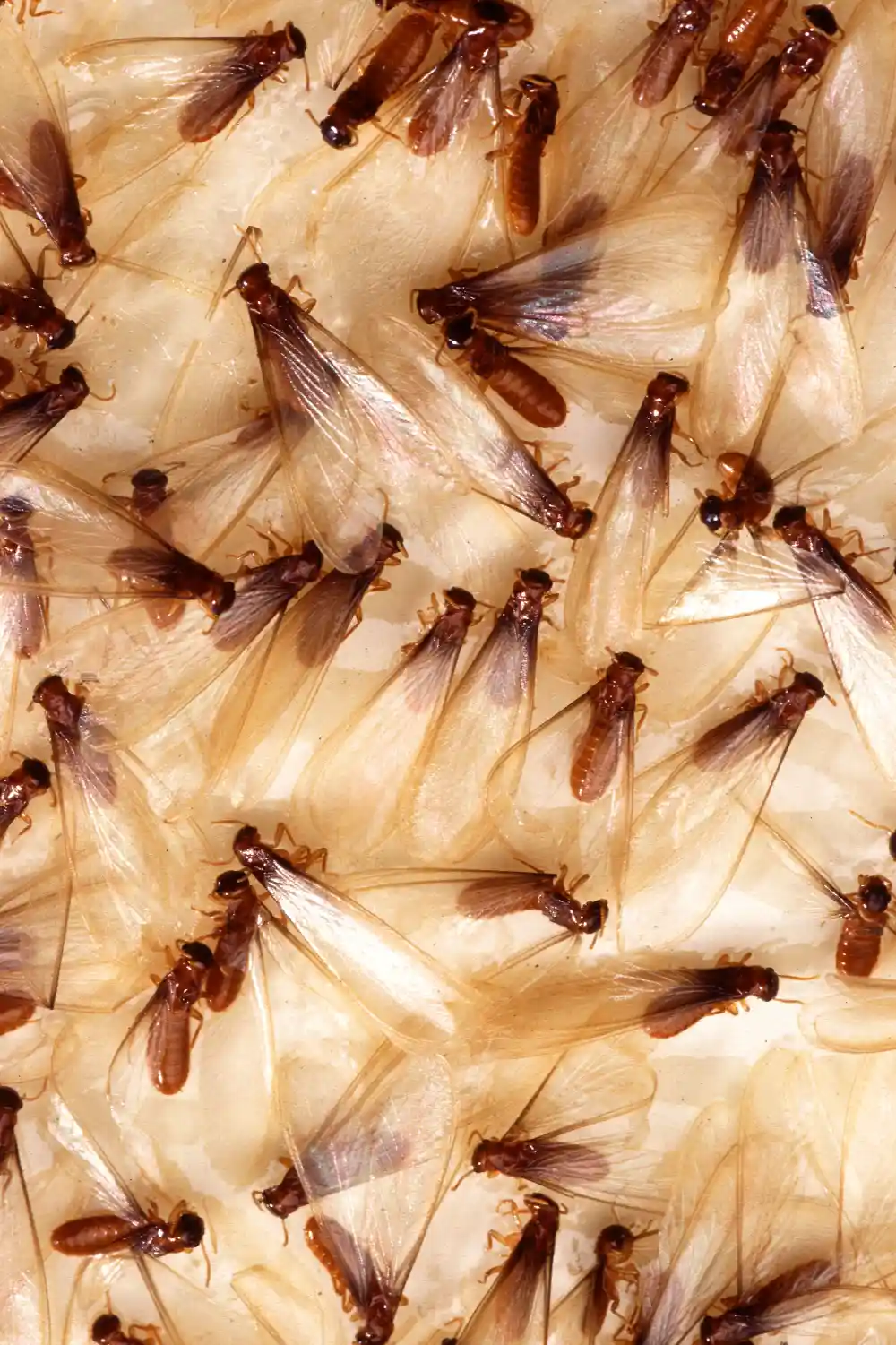
A daytime spring swarm is most likely a native subterranean termite, the least destructive and most common of the four. An after-dark swarm in May or June around Houston or a Florida city points to the Formosan termite, the most damaging of the four because a mature colony can number in the millions. See our Formosan termite swarmers guide for full identification and treatment detail. A dusk swarm in March in the Tampa or greater South Florida area could be the Asian subterranean termite, which looks close enough to a Formosan that species confirmation matters more than a visual guess. A night swarm any time from April to June, especially with no ground contact, points to a drywood termite; our drywood termites in Florida guide covers identification, pellets and tenting.
Is my house infested?
Where you saw them matters as much as which species. Outdoors, a swarm means a colony is close by, in the ground, a tree or a neighbor’s structure. It doesn’t by itself mean your house is infested.
Indoors is a different signal, and the sources don’t fully agree on how strong it is. Texas A&M’s ENT-2012 says flatly that “having termites swarm in your home is an almost sure indication of a termite infestation.” Its Formosan-specific guide, E-367, calls indoor swarmers “a strong indication” of an active infestation in that building. UF/IFAS is more cautious: a few winged termites indoors may simply have flown toward a light from outside, while wings collected in several rooms are what should prompt an inspection. LSU AgCenter draws a similar line: a few crawling in a bathroom or kitchen may have come through a vent, but termites flying indoors or large numbers of shed wings mean the colony is probably in the house.
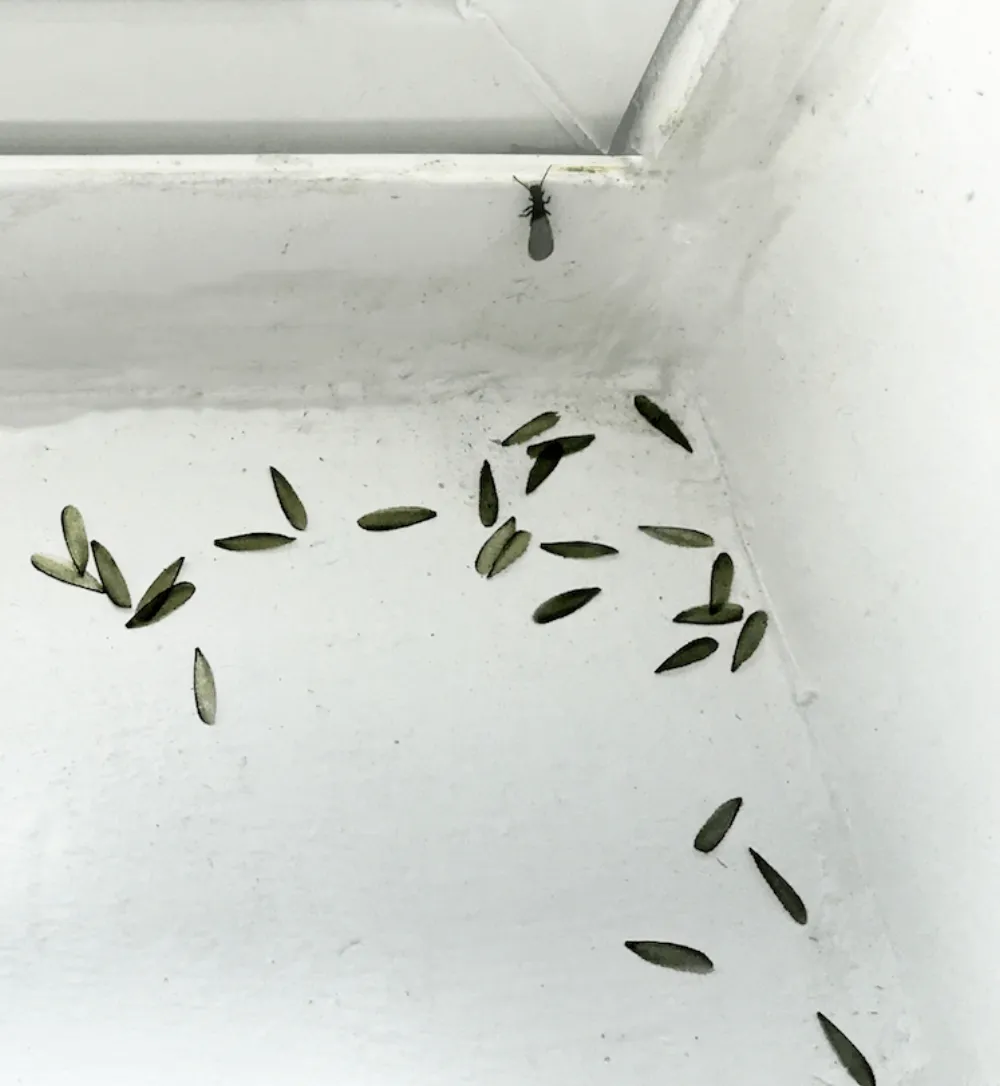
Wings by themselves count less than live insects, mud tubes or visible damage, because a termite drops its wings within minutes of landing, so leftover wings by an outside-facing window can simply be from an outdoor flight. Wings in an interior room with no windows nearby point more directly at a colony inside the house.
What to do right now
- Turn off outdoor lights while a flight is happening. LSU AgCenter advises switching them off at night during swarm season.
- Don’t bother spraying the swarmers themselves. The colony left behind does the damage. Killing a swarm outside a window doesn’t protect the house.
- Save a few specimens, wings and all, in rubbing alcohol in a crush-proof container. Note the date and the room. Check window sills, door thresholds and vent covers for more wings, and note any past leak or water stain nearby.
- Get the species confirmed. In Texas, call the Texas A&M Center for Urban and Structural Entomology at (979) 845-5855. In Florida, the UF/IFAS termite ID service is free. It needs the address where you found them.
- Book an inspection. See a licensed inspector rather than guess from a photo online, especially if you’re weighing whether to treat.
Get quotes from termite companies
Compare licensed termite companies by metro. Florida options include Tampa, Miami, Orlando, Jacksonville and West Palm Beach. Texas options include Houston, Dallas and San Antonio. Our state pages for Florida and Texas list every metro on the site.
Wings are only one clue. Our guide to the signs of termites in your house covers the others, from mud tubes to hollow-sounding wood.
Termite inspection versus WDO inspection
A licensed inspector checks accessible areas for live termites, damage, mud tubes and conditions that invite them, then writes up findings. That isn’t the same as a WDO inspection tied to a real-estate closing, which follows a state-specific form. Our guide to what a WDO inspection covers explains the difference. If the inspector’s report mentions frass rather than wings, our guide to termite droppings explains what that pellet evidence means on its own.
If the swarmers came from the ground or you have also found mud tubes, our subterranean termites guide explains what that means and how they are treated.
FAQ
Are flying termites the same as termite swarmers? Yes. “Flying termite,” “termite swarmer” and “alate” all mean the same winged, reproductive form that leaves a mature colony to start a new one.
Do flying termites bite or sting? No. Termite swarmers don’t have working mouthparts built for biting people, and they don’t sting.
How long does a termite swarm last? One flight is usually over within an hour or two, though a colony can send out more than one flight in a season. A termite that doesn’t find a mate and a nest site quickly dies or loses its wings and is eaten by predators.
What’s the difference between flying termites and flying ants? Wings, waist and antennae. Termites have two equal-length wing pairs, a thick straight-sided body and straight antennae. Ants have two long wings and two short wings, a pinched waist, and antennae that bend sharply in the middle.
I found wings but no live insects. Should I worry? A few wings near an outside-facing window may be from an outdoor flight. Wings in an interior room, especially several rooms, or wings with no obvious way in from outside, call for an inspection.