Formosan Termite Swarmers: How to Tell, What to Do Tonight, and Treatment
Winged insects at your porch light after dark in May? How to tell Formosan termite swarmers, what to do tonight, and Formosan termite treatment in Texas and Florida.
Published · Updated · How we source this
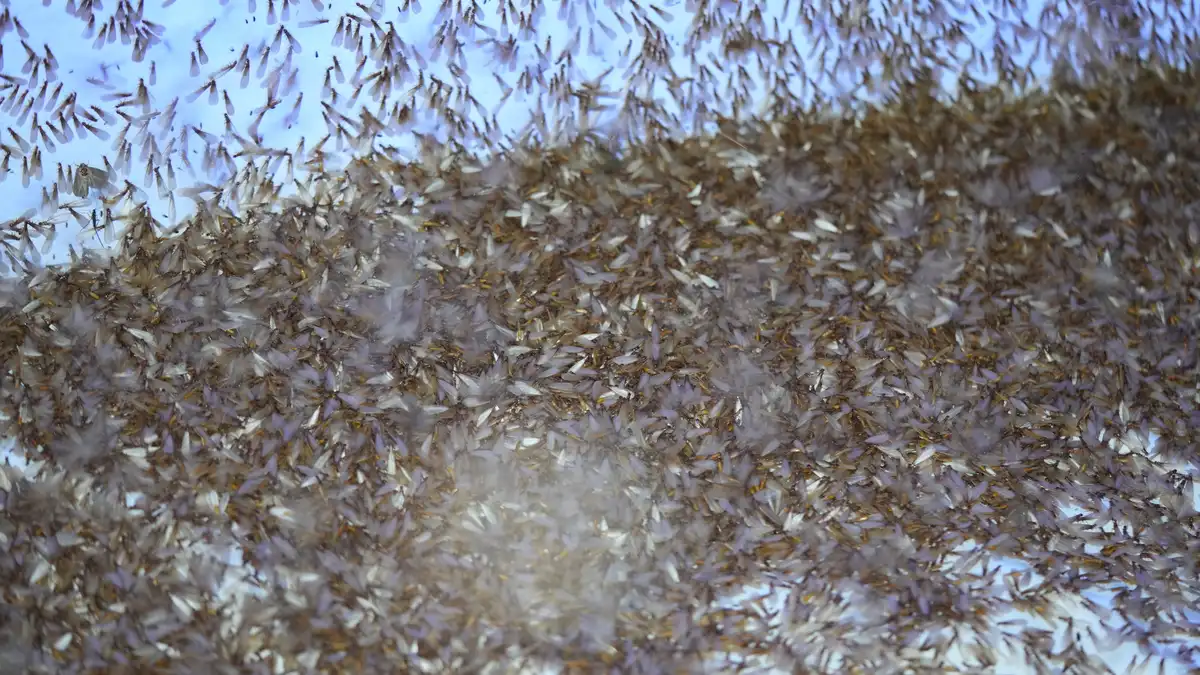
Formosan termite swarmers fly shortly after dark in late spring and head straight for lights. If hundreds of winged insects are circling your porch light on a warm May night in Houston or a Florida city, they are most likely Formosan subterranean termites, going by both Texas A&M E-367 (pages 2 and 5) and UF/IFAS EENY-121. A swarm like that means a mature colony is close by, in a building or a tree.
It doesn’t prove your own house is infested. Termites flying around inside, or piles of shed wings in several rooms, point much more strongly at your house. Tonight, switch off the lights and save a few specimens. Then book an inspection: compare termite companies in Houston or Miami-area termite companies from our listings.
How to tell Formosan swarmers from other flying insects
The time of day settles most cases. Formosans fly at night and come to lights, while native subterranean termites fly in daylight, usually in the afternoon (E-367, p. 5). Flying ants often swarm in the same season, but their pinched waist gives them away. For other species that take flight, see our flying termites guide.
| Formosan subterranean termite | Native subterranean termite | Flying ant | |
|---|---|---|---|
| When it flies | After dark, drawn to lights. In the Houston area, early May into June. In Florida, early April to late June, peaking in May | Daylight, usually afternoon. In most of Texas, March to April, and January to February in South Texas. In Florida, January to late May, early afternoon | Often the same time of year as termites |
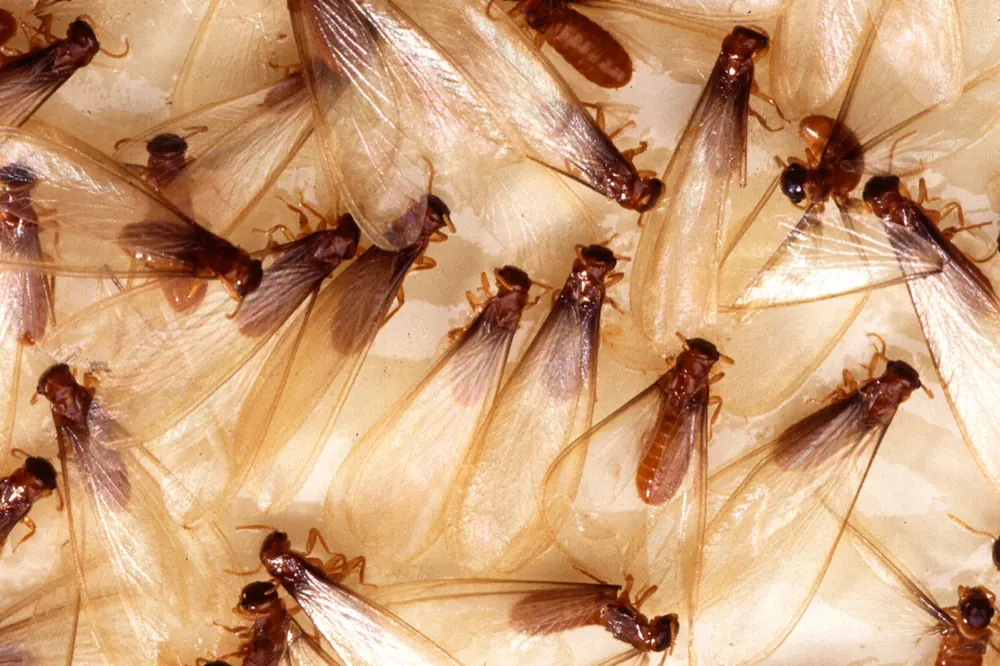
| Colour and size | Orange, amber or yellowish brown, about 12 to 15 mm (0.5 to 0.6 in) | Not given in these sources | Not given in these sources |
| Wings | All the same size, covered in fine hairs, with two dark veins along the front edge | Alike in shape and size | Front and back wings differ in shape and size |
| Body | Thick waist, straight antennae | Thick waist, straight antennae | Very narrow waist, elbowed antennae |
Formosan and ant details come from UF/IFAS EENY-121 and E-367 (pp. 2, 3 and Fig. 6) for Formosans and ants. Native timings are from Texas A&M E-368 and UF/IFAS EENY-212.
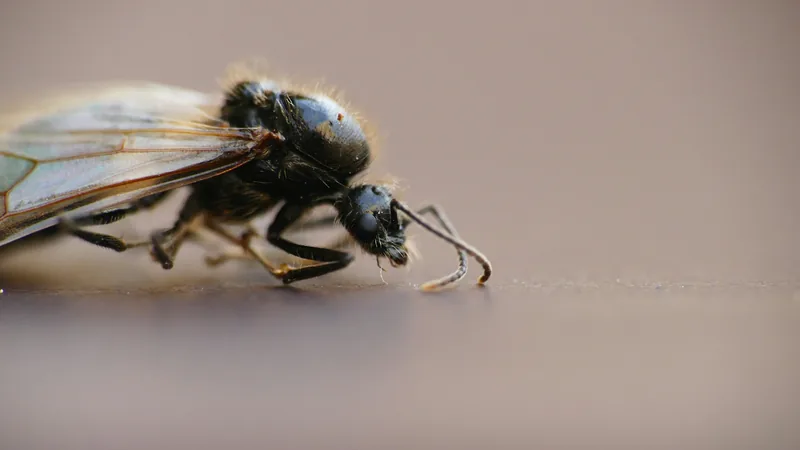
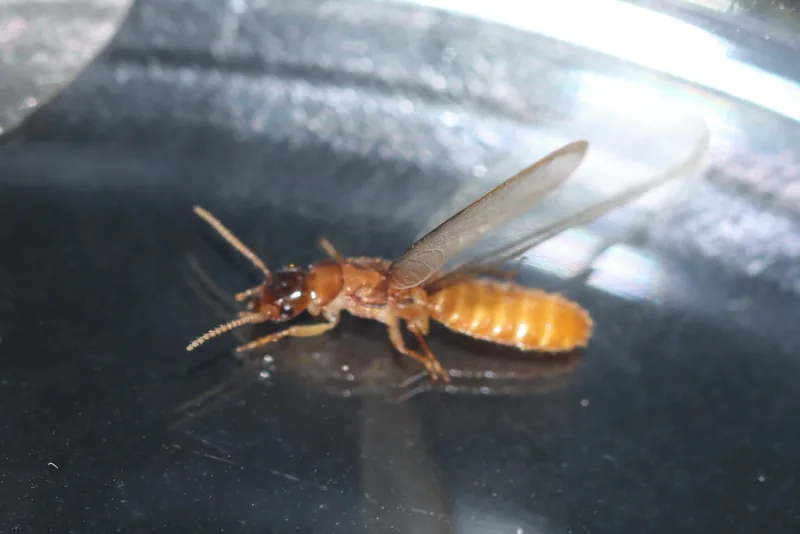
Some drywood termites share the Formosan colour and size and also come to lights at night, so the hairy wings and the two front veins are what separate them (E-367, pp. 2 to 3). In Tampa and South Florida, the Asian subterranean termite swarms around sunset in March (UF/IFAS, 2023). One Florida native, Reticulitermes hageni, flies in the evening too, but from December to early February (EENY-212). When in doubt, get a specimen identified.
In Houston the flights cluster around Mother’s Day. Light traps on Galveston Island caught the first Formosans in the second full week of May in each of three years, with flights over by early June to early July (Puckett et al. 2014). Texas A&M entomologist Robert Puckett put it as “the week before and the week after Mother’s Day” (Houston Public Media, 2023).
What to do tonight
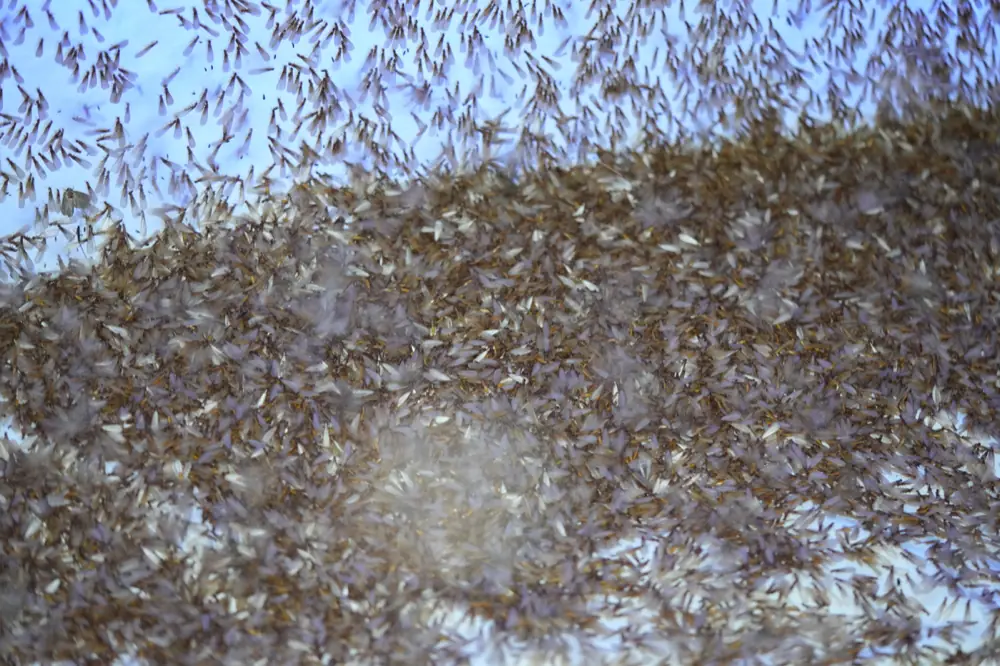
- Turn off outdoor lights while the flight lasts. LSU AgCenter advises switching them off at night in May and June (Sun, LSU AgCenter, 2026).
- Don’t bother spraying the swarm. LSU AgCenter says killing them gives little protection against further damage, and the damage comes from the workers left in the colony, not from the winged termites (NC State Extension).
- Save specimens. Put a few swarmers, wings and all, in rubbing alcohol in a crush-proof container, and note the date and the room you found them in (Texas A&M ENT-2012).
- Check bathroom and kitchen vents and window sills for wings, and note any past leak or water stain.
- Get the species confirmed. In Texas, E-367 points to the Texas A&M Center for Urban and Structural Entomology, (979) 845-5855. Call before posting anything. In Florida, the UF/IFAS termite ID service is free and needs the address where the termites were found.
- Book an inspection. Our pages for Houston, San Antonio, Dallas and Miami list local termite companies with phone numbers.
Are they in my house?
A swarm outdoors means a colony is close. Winged termites are weak fliers that usually cover less than a kilometre (Puckett et al. 2014), so it could be under a neighbour’s house or in a tree.
Indoors is where the sources differ. Texas A&M calls swarmers inside a house “a strong indication” of an active infestation in that building (E-367, p. 5). UF/IFAS says a few winged termites indoors may simply have flown in toward a light, and wings collected in several parts of the house call for an inspection (UF/IFAS, 2022). LSU draws the same line: a few crawling in a bathroom or kitchen may have come through a vent, while termites flying indoors or large numbers of wings suggest the colony is in the house.
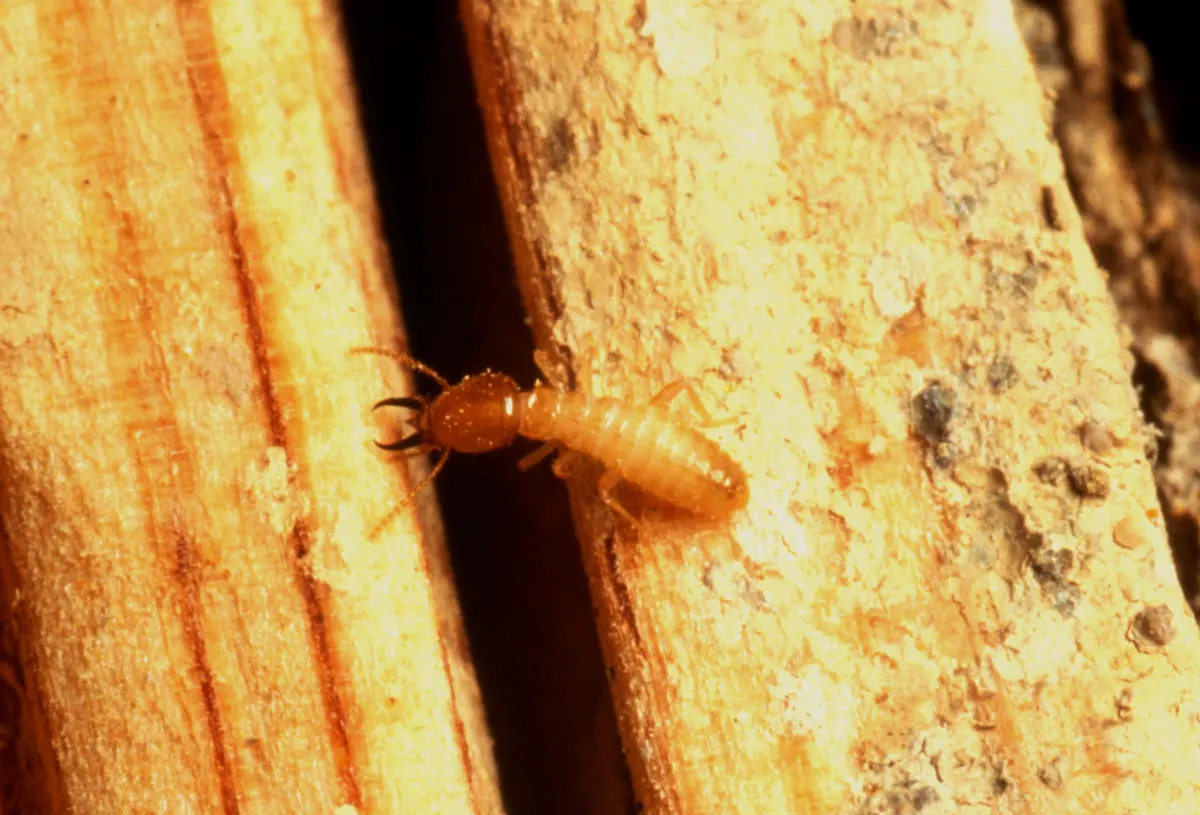
Formosans can also live above ground. They build nests of carton, a mix of chewed wood, soil, saliva and faeces, inside walls wherever a leak or air conditioner condensate keeps things damp. An aerial nest can survive cut off from the soil, and E-367 says these nests “usually are not discovered unless the wall coverings are removed” (pp. 4 to 5).
Raise this with the inspector. In Texas, the official inspection for a home sale covers visible, accessible areas, and the rule lists “the interior of hollow walls” as an area the inspector need not examine (4 TAC 7.175(b)(2)). If swarmers came from inside, ask how they will check the wall voids and the moisture source behind them. E-367 tells inspectors to use a moisture meter to find leaks and aerial nests. Our guide to what a WDO inspection covers explains what the written report includes, and our guide to signs of termites covers the clues to look for beyond a swarm.
Formosan termite treatment options compared
| Option | What it does | When it fits | Limits |
|---|---|---|---|
| Liquid soil treatment | Liquid termiticide around the foundation and every plumbing and electrical penetration | Colony coming up from the soil | UF/IFAS says liquids exclude a colony for a time. Spot jobs under 10 feet may not stop Formosans getting in elsewhere, and hidden slab cracks can defeat a full perimeter (E-367) |
| Baits | Stations holding a chitin-synthesis inhibitor, which kills workers when they moult | Most cases, since Formosans feed aggressively | Above-ground stations on active tubes should be fed on within days. In-ground stations alone may take months to years (E-367) |
| Aerial nest work | Find and fix the moisture source, treat the wall void, remove carton | Indoor swarmers or damage above ground | The nest has to be found first |
| Tenting (fumigation) | Gas through the whole building | Not a stand-alone Formosan treatment | Leaves nothing in the soil, and the colony moves back in |
For how these options compare across termite species, see our termite treatment options guide. Sources for the table are E-367, pp. 6 to 8, UF/IFAS EENY-121 and UF/IFAS, 2022.
Baits eliminate the colonies that feed on them, UF/IFAS says, and some programmes pair baits with liquid at entry points (E-367). UF/IFAS calls fumigation “useless” for subterranean termites, because only part of the colony is in the building and the rest moves back once the tent comes off. Texas A&M puts the soil barrier and liquid at entry points first for Formosans, with carton removed after that. If the barrier works, fumigation may not be needed.
Treatment protects your house. It won’t clear the street: in the New Orleans French Quarter, about 1,561 structures joined a programme from 1998 to 2012, and swarm catches fell from 2013 to 2024 though swarms still came (Cottone et al. 2025).
What Formosan treatment costs
We don’t publish a price range yet. Two price-comparison sites give Houston figures for combined Formosan treatment that are close to double apart for the same job, and neither shows a neutral method. A quote moves with the method (liquid, bait or both), whether an aerial nest has to be opened, and whether fumigation is added. Get the treatment type and the diagram in writing so two quotes describe the same work. For typical costs across termite treatments generally, see our termite treatment cost guide.
Get quotes from termite companies
In Texas, start with termite inspection in Houston, the core of the Formosan area. Texas A&M’s county list also includes Bexar, Dallas and Tarrant counties, so ask for the species to be confirmed if you’re booking San Antonio termite companies or termite inspection in Dallas. In South Florida, where UF/IFAS names Hallandale and Broward County among Formosan sites, compare termite companies around Miami.
Where Formosan termites are in Texas and Florida
In Texas, the established core runs from the Houston Ship Channel to Galveston and Texas City, plus Beaumont, Port Arthur and Orange (Texas A&M B-6080). The official county list is dated. Texas A&M’s web page, last updated in May 2022, names 32 counties while its own text says 31. A Texas A&M AgriLife specialist told Houston Public Media in May 2025 the real figure is probably “40-something”. A county missing from the list, such as Montgomery, tells you nothing either way.
In Florida, a UF study published in February 2026 found Formosans established across most coastal counties and in most large cities, and expects them to be detected statewide before 2050 (UF News). It also projects that about half of structures in urban South Florida could be at risk from one or both invasive Coptotermes species by around 2040.
Before you sign a treatment contract
E-367 warns that “some termite treatment contracts in Texas exclude Formosan termites” (p. 7). Florida makes any exclusion visible. The first page of a termite contract has to state whether it covers subterranean termites, drywood termites or both. A Formosan exclusion must be named (Fla. Admin. Code r. 5E-14.105(2)(e)). See our termite bond guide for what that warranty should cover. Ask for:
- The species, and whether it was identified from soldiers or swarmers.
- Formosan termites named as covered, in writing. Texas requires the warranty details in the disclosure documents (4 TAC 7.174(b)(5)).
- The treatment type (in Texas, partial, spot or bait) and the diagram of areas to be treated.
- How they will find an aerial nest and its moisture source, and, for baits, how often stations are checked and what happens if control fails.
How to check the company’s licence
In Texas, download the Texas Department of Agriculture’s current licence lists and look for a “T” (termite) in the business’s categories column. Company trucks must show “TPCL #” and the licence number permanently on both front doors or fenders. A magnetic sign does not comply (4 TAC 7.141(g)).
In Florida, business licences start with “JB”. Check them on the FDACS licensing portal or call FDACS on (850) 617-7997 (FDACS).
FAQ
When do Formosan termites swarm in Houston? Mostly after dark from about the second week of May into June, on calm nights, often after a few days of rain (E-367, Puckett et al. 2014 and Houston Public Media).
When do they swarm in Florida? Early April to late June, shortly after sunset, with the peak in May (UF/IFAS EENY-121).
Who identifies a specimen for free? Texas A&M’s urban entomology centre in Texas and the UF/IFAS termite ID service in Florida. For the inspection itself, compare Houston termite inspection companies or termite companies in Miami.