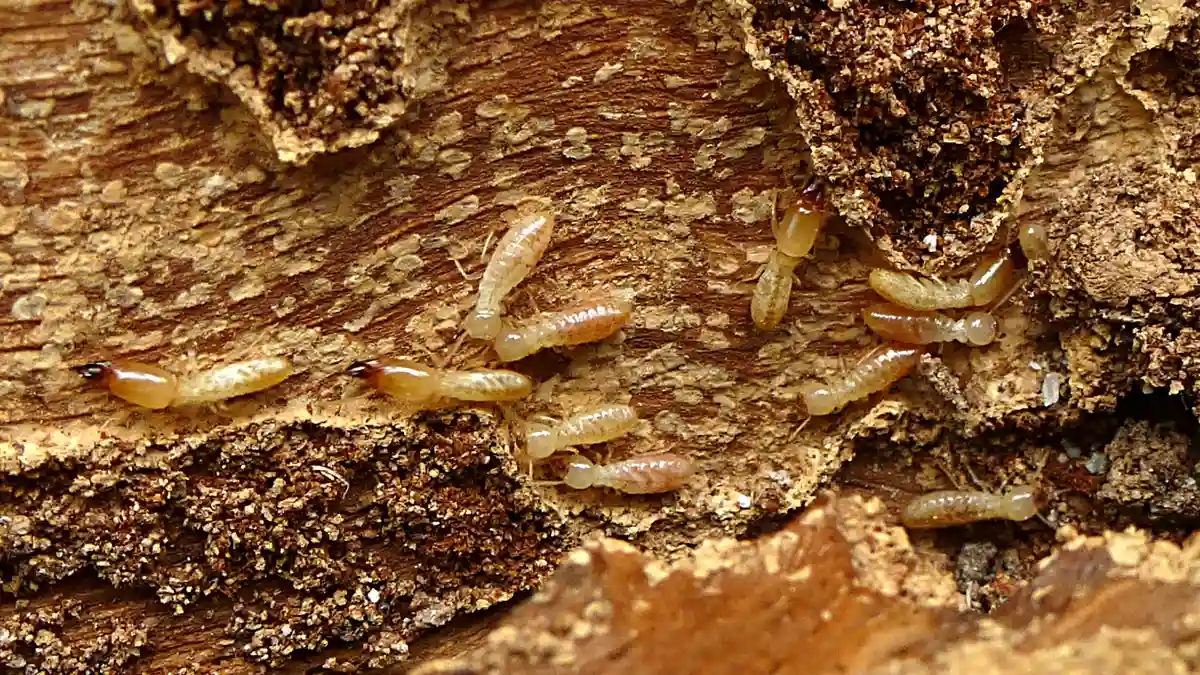
Signs of Termites in Your House (Florida and Texas)
The real signs of termites in your house: winged swarmers, mud tubes, hollow or blistered wood, and droppings. What each one means in Florida and Texas, and what to do this week.
Published · How we source this
The clearest signs of termites are winged insects at a window or light, thin mud tubes running up a foundation or pier, wood that sounds hollow or has a blistered, paper-thin surface, and small hard pellets under a tiny hole in wood. One of these gets you a professional look. Two or more together mean it’s time to stop watching and call someone.
If you already know what you found and just want quotes, jump to get an inspection. If you’re not sure yet, the table below matches what you’re looking at to what it usually means.
What you’re looking at
| What you found | What it usually means | Read more |
|---|---|---|
| Winged insects, indoors or at a light, especially in the last day or two | A swarm. Worker termites are active somewhere nearby. | swarmers, below |
| A pencil-width tube of packed dirt on a foundation wall, pier, or pipe | Termites moving between the soil and your house | mud tubes, below |
| Wood that sounds hollow when you knock on it, or paint that’s blistering or peeling for no obvious reason | Termites hollowed the wood out from the inside. What’s left is a thin outer shell. | hollow or damaged wood, below |
| A small pile of hard, uniform pellets under a tiny hole | Droppings from drywood termites, also called frass | droppings, below |
| Piles that look like sawdust, with bits of insect mixed in | Usually carpenter ants rather than termites | Termite or flying ant covers the winged-insect version of this mix-up |
Termite or flying ant?
A lot of what gets reported as flying termites is actually winged ants, and a few visible features separate them.
An ant’s antennae are bent, elbowed, shaped like a small L. A termite’s are straight. An ant’s waist is narrow and pinched where the body sections meet. A termite’s waist is thick, with no visible pinch. An ant’s front wings run noticeably longer than its hind wings. A termite’s two wing pairs match in length and shape, and both extend well past the tip of the body.
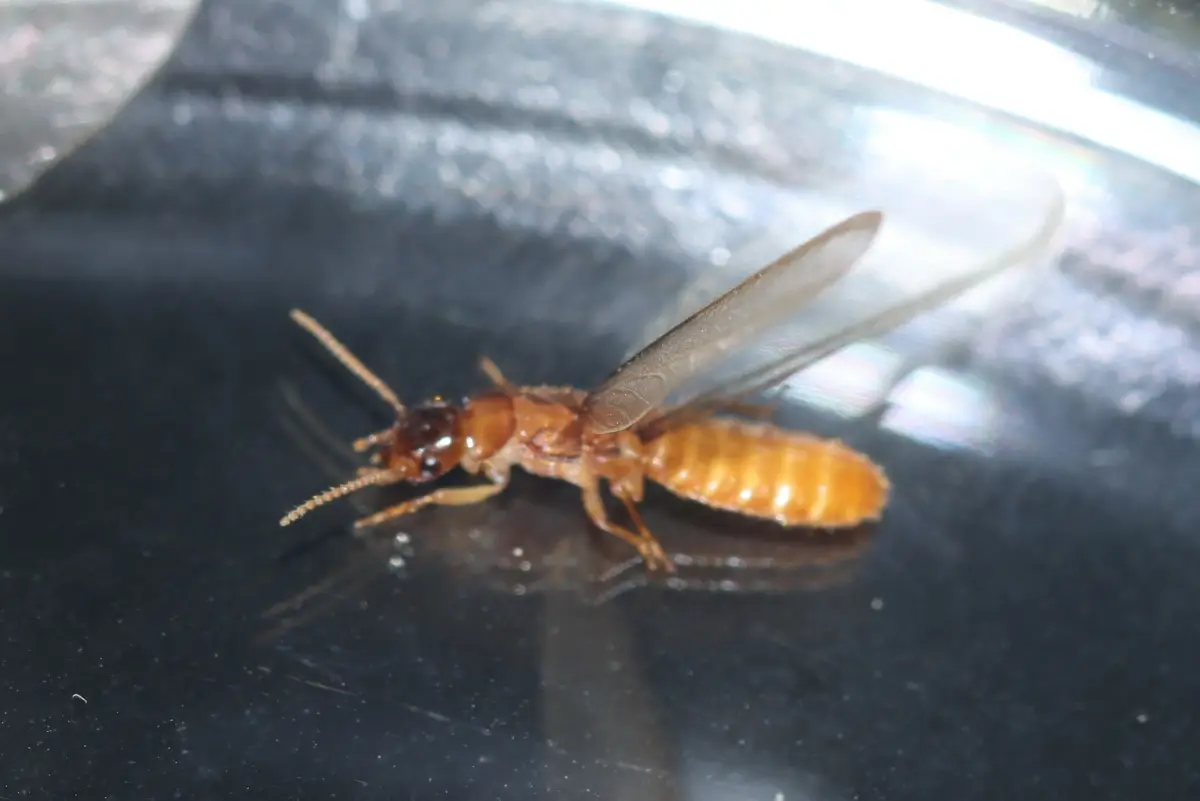
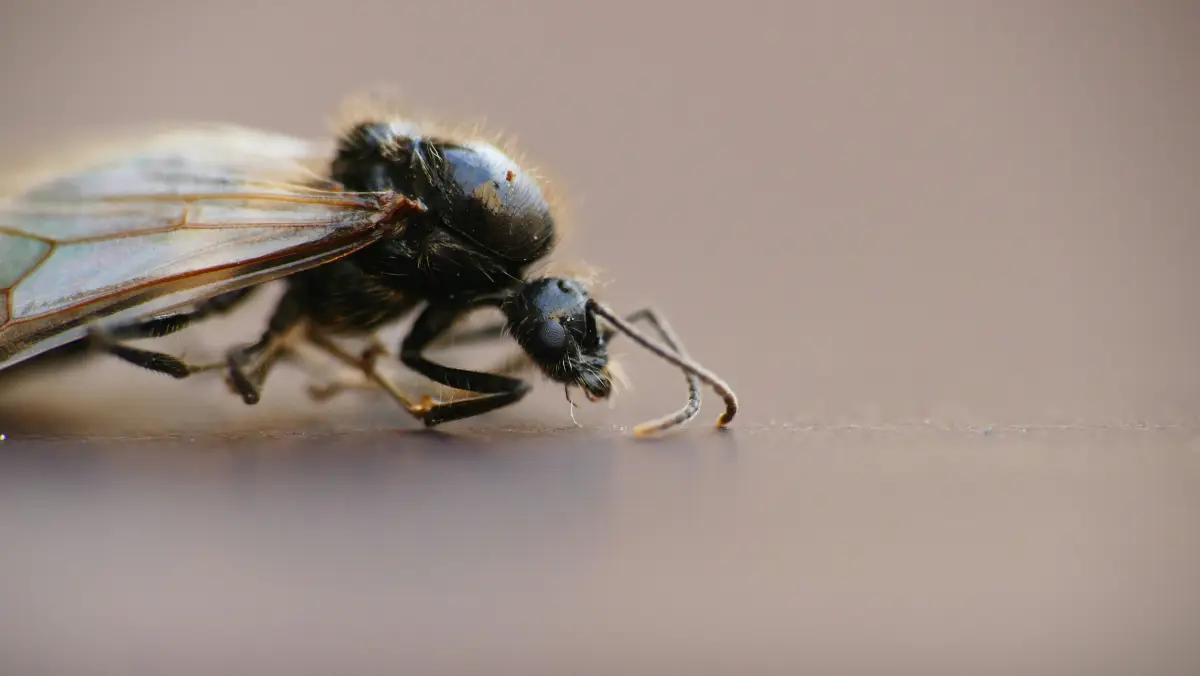
This distinction, from Kansas State University’s entomology diagnostic lab, applies across species and regions (K-State Research and Extension). For the specific look of Florida and Texas termites once they’ve shed their wings, see our guides to subterranean termites and drywood termites in Florida.
Swarmers, the sign most people notice first
Homeowners usually notice a termite problem when swarming reproductives show up, or their wings turn up on windowsills, in spider webs, or near indoor lights, according to Texas A&M AgriLife’s guide to subterranean termites (Texas A&M AgriLife). A swarm means winged termites left an established colony to start a new one. If you’re seeing them inside your house, that colony is close by. They land and shed their wings after a short flight. The wings alone, with no insects still attached, count as the same sign.
When to expect one depends on where you are and which species you have, and the window is wider than “spring.” UF/IFAS records three native Florida species with different swarm seasons: Reticulitermes hageni flies from early December to early February, R. flavipes from early January through April, and R. virginicus from early February to late May (UF/IFAS EENY-212). Texas splits differently, by geography rather than species: swarming “begins in South Texas in January and February,” but in the Panhandle “swarms do not occur until April or May,” per the same Texas A&M AgriLife guide cited above.
A Houston homeowner seeing swarmers in February and a Panhandle homeowner seeing them in May are both on schedule for their own region. Formosan termites, common along the Gulf Coast in both states, swarm at dusk in far larger numbers than the native species. Our Formosan termite swarmers guide covers that species on its own, and our flying termites guide goes deeper on the winged stage generally.
Mud tubes
A mud tube is a narrow, pencil-width tunnel of packed soil that subterranean and Formosan termites build so they can move between the ground and your house without being exposed to open air. Texas A&M AgriLife lists earthen shelter tubes “on crawl space piers, near utility openings, or on foundation walls and slabs” as a sign of infestation on their own, noting that shelter tubes and mud inside galleries “can indicate an active infestation” (Texas A&M AgriLife, cited above). UF/IFAS describes the same structures as highways connecting the underground termite population with aboveground food sources, built from soil, termite feces and partially digested wood (UF/IFAS EENY-212 and UF/IFAS ENY-2044).
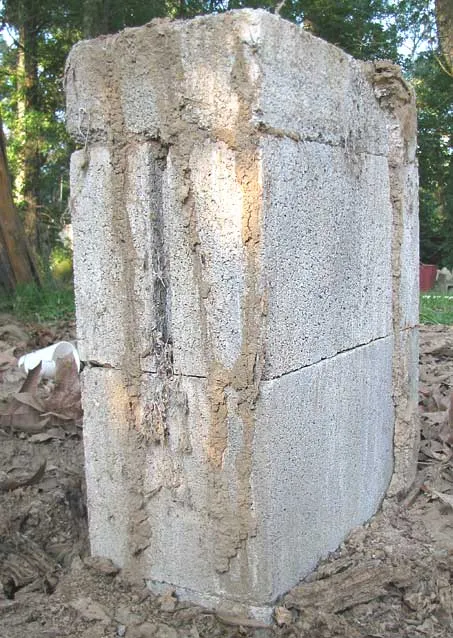
Break a short section of tube open. A dry, empty tube suggests the termites moved on or were already treated. A damp tube with live termites inside means the activity is current. Either way, act on a mud tube on the outside of your house now. It means termites reached your house from the soil, and there is very likely wood touching soil somewhere nearby. See our guide to subterranean termites and mud tubes for what to check next once you’ve found one.
Hollow or damaged wood
Termites that feed inside wood, subterranean species included, eat along the direction the wood fibers run and take the softer growth rings first. A piece of wood can look fine from outside while the inside is mostly gone. UF/IFAS describes it plainly: damaged wood “may appear blistered or peeling, as termites hollow out the wood leaving a paper-thin” outer layer (UF/IFAS EENY-212). Texas A&M AgriLife adds that the damage is usually confined to the soft, spring growth of the wood. Its tunnels tend to follow the wood grain. Many are lined with mud, or show a pale, spotted look where soft fecal material was plastered on the tunnel wall (Texas A&M AgriLife, cited above).
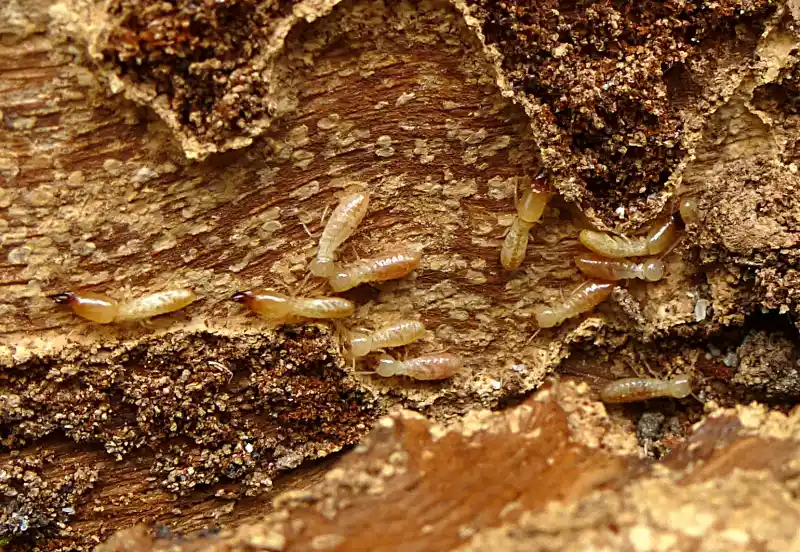
Knock on trim, sills or framing with the handle of a screwdriver. Solid wood sounds dull and firm. Hollowed wood sounds papery or gives slightly under light pressure. If it gives, press gently rather than pushing the screwdriver through. Confirming what’s inside, and how far it goes, belongs to an inspector.
Droppings (frass)
Only drywood termites leave droppings you’ll actually find in a pile: hard, uniform pellets, roughly a millimeter long, usually below a small sealed hole in wood. Formosan and other subterranean termites never produce dry pellets. Their waste stays wet and becomes mud tube material or, for Formosan colonies, gets packed into a nest inside a wall cavity instead. A few pellets tell you termites were in that piece of wood at some point. They don’t tell you on their own whether the colony is still there. We cover identification, look-alikes and what a pile does and doesn’t prove on our termite droppings guide, which this page only summarizes.
What to do this week
Photograph everything you found, in place, with something for scale, and note the date and the spot in the house. Leave mud tubes and wood damage undisturbed until you’ve done that: an inspector reading fresh evidence has more to work with than one reading a spot you already cleaned up. Check a few other likely places too, including window sills, door frames, the attic and any wood touching soil around the house. One sign in one place is common. Signs turning up in several places usually points to a larger or older colony. After that, get an inspection rather than guess from photos. Photo identification has real limits, and whether the fix is a spot repair or something bigger is not a call to make from a windowsill.
Costs vary with what’s found and how far it’s spread. See what termite treatment costs for published Florida and Texas prices, and our comparison of treatment options for how tenting, spot treatment, baiting and liquid barriers compare against each other. Our termite tenting in Florida guide covers that option in detail if drywood termites are what you found. If you’re buying or selling and need a formal report rather than an opinion, see what a WDO inspection actually covers. Our termite bond guide helps if you’re weighing an ongoing service contract against a one-time treatment.
Get a termite inspection
An inspector can confirm which sign you have and how far it extends in one visit, and recommend a treatment that fits. Florida licenses this work through FDACS. Texas licenses it through the Texas Department of Agriculture’s Structural Pest Control Service. Ask for the licence number and confirm it covers termite or wood-destroying organism work before you book.
Start with termite companies in Tampa, Orlando, Miami, Jacksonville, West Palm Beach or Fort Myers, or see every Florida metro. In Texas, start with Houston, Dallas or San Antonio, or see every Texas metro. For every metro we cover in both states, see termite inspection near you.
Common questions
Do all these signs mean I have termites right now? Mud tubes and swarmers are strong signs of current activity. Droppings from drywood termites are weaker evidence on their own, since the pellets are inert and can sit for years after a colony is gone or treated. An inspection tells you which one applies to what you found.
I found winged insects but no other signs. Should I worry? Get it checked. A swarm means a colony reached maturity somewhere nearby, even before you’ve found where. See termite or flying ant first to rule out ants.
Can I treat this myself once I’ve found a sign? Store-bought products treat the wood you can see. They rarely reach the rest of a colony, and there’s usually no way to tell by looking how far it goes or where the nest actually sits. A professional assessment before any treatment gives you that answer.
Which sign is the most urgent? Live mud tubes with termites inside, or swarmers actively emerging indoors. Both point to an active colony in contact with your house today.
Do these signs differ between Florida and Texas? The signs stay the same in both states. The timing changes: Florida’s native species swarm anywhere from December to May depending which one you have, and Texas swarms start earlier in the south than in the Panhandle. See swarmers above for the specific windows.